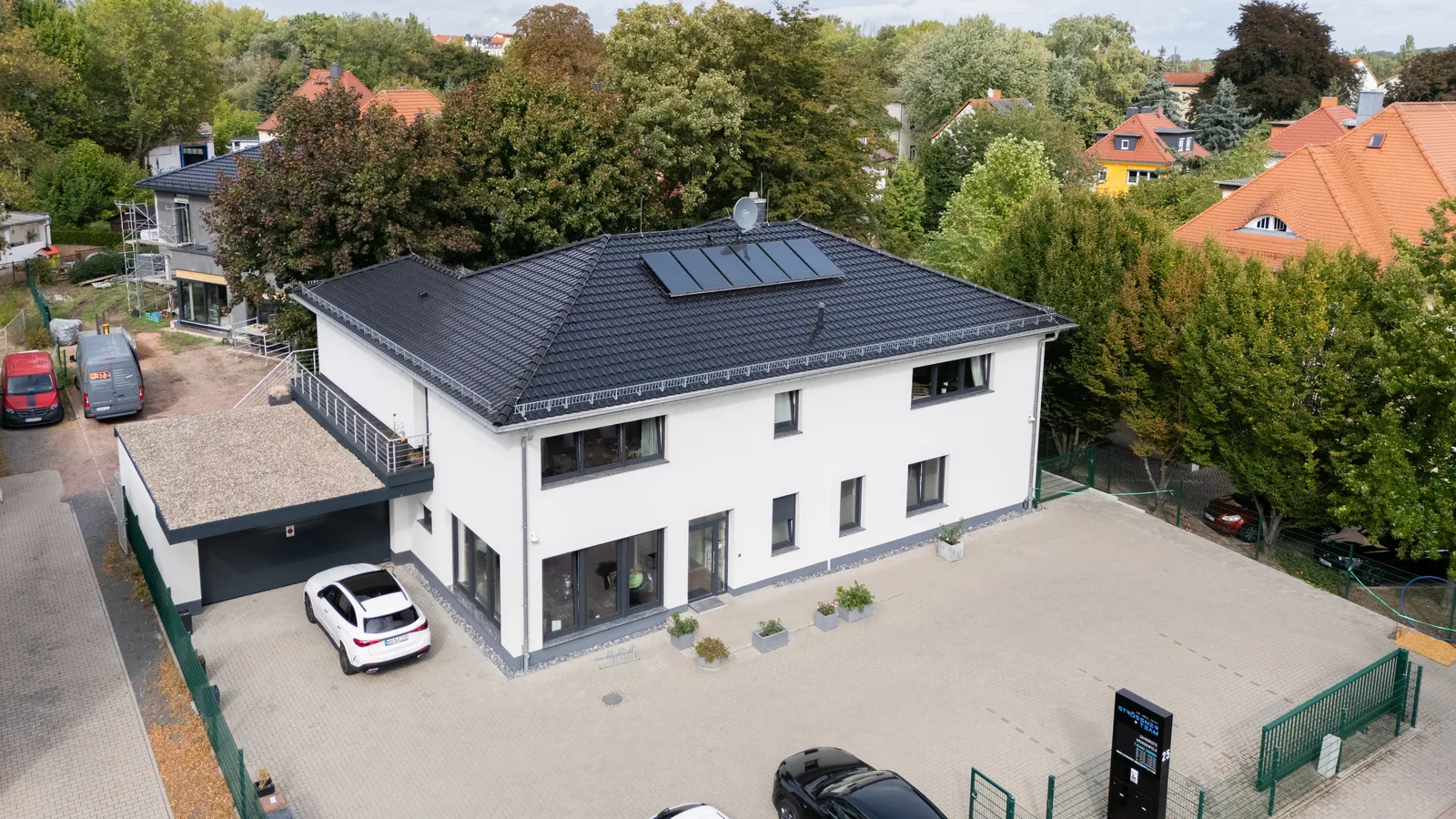
Root Canal Treatment · Weißenfels

Root Canal Treatment in Weißenfels

Dr. med. dent. M.Sc. Sandro Strößner
Root Canal Treatment · Weißenfels
51.2017° N · 11.9678° E
MMXXVI · Weißenfels

The essentials in 30 seconds

— Root Canal Treatment · Weißenfels

Who treats you

Dr. med. dent. M.Sc. Sandro Strößner – working in implantology since 2013 · M.Sc. in Oral Implantology and Periodontology – together with the team at Zahnkompetenzzentrum Weißenfels.

First Appointment

Findings and, if needed, X-ray/cone-beam CT, discussing the chances of preserving the tooth; for acute symptoms, short-notice appointments where possible.

Costs

Before every treatment, you receive a written treatment and cost plan showing your own contribution; patients with statutory and private health insurance are treated equally.

First Step

Book an appointment around the clock via our online reception (the “Appointment” button), or by phone during opening hours on 03443 339 65 54.

01 — Professional Society
Member of the German Society for Implantology (DGI)
02 — Listing
Listed with the Leading Implant Centers
03 — Experience
Working in implantology since 2013 · M.Sc. Oral Implantology and Periodontology
04 — Patient Voices
★ 4.9 on Google · 216 reviews
Attitude
A root canal treatment is the last chance to save an inflamed tooth – often painful and lengthy in the past, but gentle, efficient and tooth-preserving today thanks to modern endodontic technology.
— Zahnkompetenzzentrum Dr. Strößner
01
01 — Diagnostics

Understanding before we act.

Cone-beam CT scan, intraoral scans, structured assessment. The first appointment isn't treatment — it's a conversation backed by data.

Dentist wearing loupes examining a patient
Quiet · 3D Volume Tomograph 01 / 03
02 — Planning

Digitally planned, thought through backwards.

From the final dental prosthesis back to the surgery. What should exist at the end determines the first step — not the other way round.

A digitally captured jaw shown in CAD software on screen
Quiet · Backward Planning 02 / 03
03 — Execution

Minimally invasive, navigated.

Coordinated by one team under one roof. Surgery, prosthetics, laboratory — nothing handed off, nothing lost in translation.

Dental technician's work matching shade using a shade guide
Quiet · Surgical Still Life 03 / 03
01 — Diagnostics
The Principle

Our Focus Areas — Root Canal Treatment & More.

Treatment generally takes place over one to two sessions, depending on the findings, under local anaesthetic or – on request – under sedation. With a clear indication and modern technique, there are very good prospects of preserving your own tooth permanently.

— scroll horizontally
Explained from everyday practice

Your questions — answered by us.

Short videos in which our team answers the questions we're asked most often. No jargon, no sales pressure.

The videos provide general information and do not replace individual advice or examination. The course and outcome of treatment depend on personal circumstances; medicine offers no guarantee of success. All videos have subtitles.

Preserving your own tooth

Root Canal Treatment in Weißenfels – when a tooth is affected from within

A tooth is not made up only of the hard, visible crown and the root. Inside it runs a fine network of cavities filled with living tissue – the so-called pulp, commonly known as the “tooth nerve”. This tissue contains nerve fibres, blood vessels, and connective tissue, and supplies the tooth with nutrients during its development. As long as the pulp is healthy, you barely notice it. If bacteria penetrate this protected interior, however – for example through deep decay, a crack in the tooth, or an accident – the tissue can become inflamed. Such inflammation does not heal on its own. It generally progresses until the pulp tissue dies and the bacteria spread through the root tip into the surrounding jawbone.

This is exactly where endodontics comes in – the branch of dentistry concerned with the interior of the tooth and the treatment of the root canals. Root canal treatment (technically known as endodontic treatment) has a clear goal: to completely remove inflamed or dead tissue, thoroughly clean the canal system, and then seal it tightly. In this way, it is often possible to save a tooth that, only a few decades ago, would have been extracted. Preserving your own tooth is not a nostalgic concern here, but a medically sound one: no dental prosthetics – however high the quality – can fully replace the function and interplay of a natural tooth firmly anchored in the jaw.

At the Zahnkompetenzzentrum Dr. med. dent. M.Sc. Sandro Strößner in Weißenfels, preserving natural teeth is a focus of our daily work. Endodontic treatment is carried out here using modern technical aids and a structured, traceable approach. On this page, we explain in detail when root canal treatment becomes necessary, how it proceeds step by step, what role magnifying loupes, mechanical instrumentation and electronic length measurement play in the process, and what alternatives exist. This allows you to take part in treatment decisions on a well-informed basis.

Important to note in advance: the following information does not replace a personal consultation or a dental examination. Every tooth, every root and every medical history is individual. Whether, and how, a particular tooth can be treated can only be assessed after a clinical examination and X-rays. For a personal conversation, you can reach our practice in Weißenfels on 03443 339 65 54.

Diagnosis & Symptoms

How can you tell that root canal treatment is needed?

A problem with the tooth nerve can announce itself in very different ways – sometimes with severe symptoms, sometimes almost unnoticed. This is exactly what makes dental diagnostics so important. Symptoms that may indicate inflammation or death of the pulp should be taken seriously and examined promptly, as the underlying cause generally does not go away on its own.

Typical symptoms that should be checked out

  • Persistent or throbbing toothache that occurs with no obvious external cause – often more intense in the evening and at night.
  • A longer-lasting, heightened sensitivity to cold, heat or sweetness, which doesn't quickly subside after the stimulus but lingers on.
  • Pain when biting down or touching the tooth, for example when chewing hard food.
  • Swelling of the gum or cheek, or a feeling of pressure in the area of the root tip.
  • A “gum boil” (fistula) on the gum, from which fluid occasionally drains.
  • A single tooth turning greyish, which can indicate dead tissue inside the tooth.

It is equally important to understand that a diseased tooth nerve does not necessarily cause pain. Some inflammations progress silently and are only discovered when an X-ray happens to be taken anyway, or when acute swelling occurs. Likewise, initially severe pain that suddenly subsides is not a reliable sign of improvement – it can also mean that the nerve tissue has died, while the inflammation continues to progress in the bone.

How we make the diagnosis

A reliable diagnosis is never based on a single symptom, but on considering several findings together. At our practice in Weißenfels, we begin with a detailed conversation about your symptoms: when do they occur, what do they feel like, what triggers or eases them? A clinical examination then follows.

  • Sensitivity test: A cold stimulus or a weak electrical stimulus can be used to check whether the tooth nerve still responds.
  • Percussion and bite tests: These give an indication of whether the tissue around the root tip is irritated.
  • X-ray diagnostics: An X-ray shows the roots, the course of the canals, and any foci of inflammation in the bone that are not visible to the naked eye.
  • In complex cases, a 3D X-ray (cone-beam CT) can provide additional information about the anatomy of the roots.

Only once these findings are brought together can we assess whether a root canal treatment is the right approach – or whether another measure seems more appropriate. This diagnostic step is the basis for every well-considered treatment decision and takes the time it needs accordingly.

Treatment Goal

Saving your teeth as the top priority in endodontics

The central purpose of root canal treatment is to preserve a tooth that would otherwise be lost. What may sound self-evident at first has far-reaching significance for the health of the entire chewing system. Every natural tooth is suspended elastically in the jawbone by fine fibres, providing finely tuned pressure sensation while chewing. It holds its neighbouring teeth in position and, together with the opposing tooth, contributes to a stable bite.

When a tooth is lost, this balance starts to shift. Neighbouring teeth can tilt into the gap, the opposing tooth can gradually move out of position, and the jawbone, no longer loaded at that spot, recedes over time. Closing a gap with dental prosthetics is possible, and sometimes unavoidable – but every tooth that is preserved saves this effort and maintains a function that has developed over years.

Why preservation can be worthwhile

  • The natural tooth remains firmly anchored in the jaw, while still moving with a degree of elasticity via its supporting structures.
  • The natural sense of chewing and pressure through the tooth root is preserved.
  • Neighbouring and opposing teeth keep their position and how they work together.
  • The jawbone in the area of the tooth root continues to be loaded, and is therefore preserved.
  • A more involved way of closing the gap with a bridge or implant can often be avoided or delayed.

However, a root-canal-treated tooth is not a "new" tooth. It has lost its living inner tissue and is therefore generally more brittle than a vital tooth. This is why the restoration that follows the actual root filling – often in the form of a stabilising crown – is an important part of the overall concept. Endodontics is never just the treatment of the canal; it always also involves planning what comes afterwards, so that the preserved tooth remains able to bear load in the long term.

Whether a tooth is worth preserving, and can be preserved, depends on many factors: the extent of the damage, the condition of the periodontium, the anatomy of the roots, and general health. In some cases, preservation is possible with relatively little effort; in others, it is involved or no longer sensible. We weigh this up together with you – openly, objectively, and without wanting to preserve the natural tooth at any cost.

Step by Step

How Root Canal Treatment Works

A root canal treatment follows a clearly structured approach. Depending on the tooth, the number and path of the canals, and the extent of the inflammation, it can be carried out in one or several sessions. The overview below shows the individual steps, as they usually take place in our practice in Weißenfels:

  1. Anaesthetic and pain relief: Before treatment begins, the tooth is numbed with a local anaesthetic, so the treatment generally proceeds without pain. We only start the actual work once the area is reliably numb.
  2. Isolation with a rubber dam: a thin sheet of stretched rubber, known as a rubber dam, is placed over the tooth. It keeps the tooth dry and clean and prevents saliva, with its bacteria, from getting into the opened canal – an important requirement for clean working conditions.
  3. Opening the tooth: A small access point into the interior of the tooth is created via the chewing surface, to expose the entrances to the root canals.
  4. Removing the diseased tissue: The inflamed or dead pulp tissue is removed from the canals.
  5. Determining the length: Using an electronic length measurement and, if necessary, an X-ray, the exact length of each canal is determined up to the root tip, so that preparation ends exactly where it should.
  6. Preparing the canals: The root canals are widened and shaped using fine instruments – nowadays usually mechanically with flexible files – so that they can be thoroughly cleaned and later filled tightly.
  7. Disinfecting rinse: During and after preparation, the canals are rinsed several times with special solutions, to remove bacteria and tissue remnants even from fine side branches.
  8. Medicated dressing if required: If the inflammation is pronounced, a medicated dressing can be placed in the canal and the tooth temporarily sealed. The final filling then follows at a subsequent appointment.
  9. Root filling: once the canals are clean and dry, they are densely filled with a body-compatible filling material – often gutta-percha combined with a sealing material – right up to the root tip, so that no bacteria can enter or remain.
  10. Sealing and building up the tooth: the access point is sealed, and the tooth is built up so that it can bear load again. A stabilising restoration – such as a crown – is often fitted afterwards, to protect the tooth in the long term.

How long a single session takes depends heavily on the particular tooth: a front tooth with a single, straight canal is usually treated considerably more quickly than a molar with three or four strongly curved canals. We take the time needed for each step, as the thoroughness of the cleaning and the tightness of the seal are crucial for a good treatment outcome.

Modern Endodontics

Technology that makes the finest structures visible and treatable

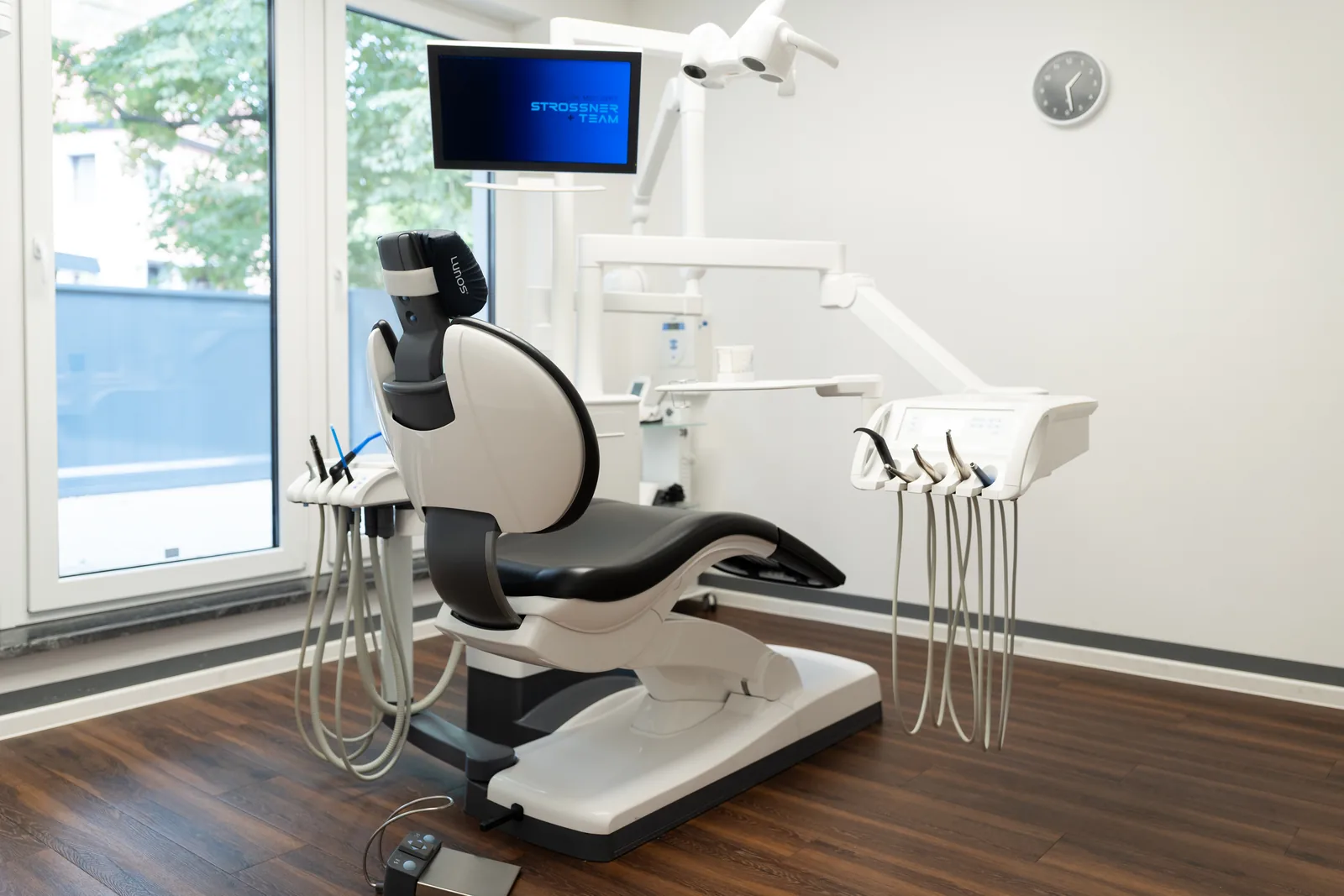
The root canals of a tooth are often only a few tenths of a millimetre wide, run in curves, and branch into fine lateral canals. Fully grasping this demanding inner anatomy with the naked eye is barely possible. Modern endodontic technology has, over recent decades, helped make working inside the tooth more precise, gentler, and more comfortable for patients. At our practice in Weißenfels, we rely on up-to-date instrumentation.

Magnified View: Loupes and Microscope

Magnifying loupes or a surgical microscope magnify the treatment field many times over and provide bright, high-contrast illumination. This makes it possible to see canal entrances, fine structures and the course of the canals considerably better than with the naked eye. This magnified view supports a controlled, tissue-sparing approach.

Machine preparation with flexible files

While canals used to be shaped exclusively by hand, today mostly machine-driven, highly flexible files made of modern alloys are used. They adapt to the curved course of the canal and shape it evenly. This method is generally gentle and allows for reproducible, clean instrumentation, even in challenging anatomy.

Electrometric Length Measurement

Knowing the exact length of a root canal is crucial: instrumentation should reach almost to the root tip, but not beyond it. Electronic apex location (endometry) determines this working length using a fine electrical measurement taken directly on the patient, complementing the information from the X-ray. This allows for precise work and can reduce the number of X-rays needed.

Careful Disinfection

Because bacteria can also survive in the finest side branches, chemical cleaning of the canals is at least as important as mechanical instrumentation. Coordinated irrigation solutions are used to clean and disinfect the canals thoroughly. It is only the combination of mechanical shaping and chemical cleaning that creates the conditions for a tight, long-lasting root filling.

These technical aids are not an end in themselves. They serve a single purpose: to clean the canal system as completely as possible and seal it tightly, giving the tooth the best possible starting position for preservation. The experience and care of the clinician remain the most important factor here – technology supports this, but does not replace it.

Chances of Success & Alternatives

What you can realistically expect – and what other options there are

Root canal treatment is an established procedure in dentistry that can save many teeth that would previously have had to be extracted. However, how well the treatment goes depends on numerous factors and cannot be predicted as a general rule. There can fundamentally be no guarantee of treatment success in medicine – this applies to endodontics just as it does to other procedures.

Factors that influence the treatment outcome

  • The initial condition of the tooth and the extent of the inflammation at the start of treatment.
  • Root anatomy – straight, curved, branched or calcified.
  • How much healthy tooth structure remains after treatment, and can be built up in a stable way.
  • The quality of the subsequent restoration, for example through a well-sealed crown.
  • General oral health, home oral care and regular check-ups.

In some cases, the source of inflammation in the bone does not heal completely, or symptoms return later. In that case, repeat root canal treatment (revision) or a minor surgical procedure on the root tip may be considered. We explain this to you openly in advance as well, so that you begin treatment with realistic expectations.

Alternative: Tooth Extraction and Replacement

Not every tooth can be saved, and saving it is not always the most sensible option. If a tooth is too badly damaged, if the periodontal support structures are permanently damaged, or if treatment no longer promises a reliable outcome, removing the tooth can be the more honest solution. The resulting gap can then be restored in various ways:

  • an implant, i.e. an artificial root in the jawbone with a crown fitted on top,
  • a bridge, supported by the neighbouring teeth,
  • or – depending on the situation – a removable solution.

Each of these options has its own requirements, advantages and disadvantages, and different costs and treatment times. Which option is right in an individual case depends on the specific situation and also on your personal wishes. At our practice in Weißenfels, we set out the possible options for you side by side, so that you can make an informed decision – whether to preserve your own tooth, or, if that is no longer promising, to choose a well-planned alternative.

Aftercare & Costs

Crown, aftercare and the question of cost

In many cases, treatment is not yet complete once the root filling has been placed. A tooth that has undergone root canal treatment has lost its living inner tissue and is often already weakened by the preceding decay or a fracture. For it to withstand chewing forces in the long term, a stabilising restoration is often advisable – particularly for the more heavily loaded molars. A crown encases the tooth and protects it from breaking.

Aftercare and Your Role

After treatment, the tooth may be sensitive to pressure or touch for a few days, particularly when biting down. This usually settles down. Careful oral care at home, regular check-ups, and – depending on the findings – follow-up X-rays, with which we monitor bone healing over time, are all important for long-term preservation of the tooth. This allows changes to be identified at an early stage.

  • Go easy on the treated tooth while the anaesthetic is still working, and avoid very hard food on that side for now.
  • Please attend the agreed follow-up and check-up appointments, so that treatment can be completed on schedule.
  • Care for the tooth carefully, just like your other teeth, with a toothbrush and interdental cleaning.
  • Get in touch if, after a few days, you still have severe symptoms, swelling, or a fever.

Costs and Insurance Cover

Statutory health insurers cover root canal treatment if the tooth is classed as worth saving under the applicable guidelines – this is the case for many front teeth and molars, though certain conditions apply to individual teeth further back in the jaw. Within this framework, the insurer covers the cost of the standard service; an out-of-pocket share generally does not arise here. Certain additional measures that go beyond the standard service – for example, particularly extensive preparation or additional diagnostics – may be charged as a private service. An out-of-pocket share usually applies to the subsequent crown, depending on the material and restoration chosen. For privately insured patients, reimbursement depends on the individual tariff. We discuss the costs expected in your case with you transparently in advance and, for optional or private services, prepare a written treatment and cost plan, which you can review at your own pace before treatment and, if you wish, submit to your insurer.

Do you have questions about possible root canal treatment, or symptoms that should be checked? Book an appointment at our practice in Weißenfels. We will examine your tooth, discuss the findings with you in an understandable way, and show you the options available for preserving your tooth. You can reach the Zahnkompetenzzentrum Dr. med. dent. M.Sc. Sandro Strößner on 03443 339 65 54.

Portrait Dr. med. dent. M.Sc. Sandro Strößner
Dr. med. dent. M.Sc. Sandro Strößner

Modern Endodontics – Saving Teeth Instead of Extraction

A root canal treatment is the last chance to save an inflamed tooth – often painful and lengthy in the past, but gentle, efficient and tooth-preserving today, thanks to modern endodontic technology. At our Zahnkompetenzzentrum in Weißenfels, we work with machine-assisted nickel-titanium preparation, electronic length measurement, and thermoplastic root canal filling.

Before starting, we take a cone-beam CT scan on request, so we can assess the anatomy of your root canal system three-dimensionally. This is especially important for complicated groups of teeth (upper molars with four canals, curved canals, retreatment cases), where a normal X-ray reaches its limits.

Dr. med. dent. M.Sc. Sandro Strößner — Weißenfels, MMXXIII
— Practice Video · 02:14 Weißenfels / Sachsen-Anhalt
00:00
02:14

Voices that have stayed.

— Excerpts from patient conversations
01 — Voice

I was an anxious patient for fifty years. Today, I am no longer one. Not because my anxiety has disappeared, but because this team took it seriously, without ever making a drama out of it.

— K. M. · written patient feedback, held on file at the practice
02 — Voice

What convinced me was the absence of marketing. No promises. Just planning, explanation, execution. I had eight implants placed and didn't even feel like I'd made a difficult decision.

— A. H. · written patient feedback, held on file at the practice

Questions, answered calmly.

— Before your first appointment
Treatment is generally carried out under local anaesthetic, so that the procedure itself usually involves as little pain as possible. We only begin work once the area is reliably numb. In the days that follow, the tooth may be temporarily sensitive to pressure, which usually settles on its own.
Possible signs include persistent or throbbing toothache, sensitivity to cold or heat that lingers longer than usual, pain when biting down, swelling of the gum, or discolouration of a single tooth. These symptoms should be assessed by a dentist, as they do not go away on their own.
Yes. Some inflammations progress gradually and are only discovered during an X-ray examination or when acute swelling occurs. Pain that suddenly subsides is also not a reliable sign of improvement, either, but can indicate that the nerve tissue is dying. This is why dental diagnostics are so important.
A natural tooth is anchored firmly and elastically in the jaw, provides a fine sense of chewing perception, and keeps neighbouring and opposing teeth in position. Preserving it protects the jawbone from resorption and can avoid or delay a more elaborate gap closure. Whether preservation makes sense in an individual case is something we clarify together.
This depends on the particular tooth. A front tooth with a straight canal can often be treated in a single session, while a molar with several curved canals, or pronounced inflammation, may require several appointments. In cases of more significant inflammation, a medicated dressing is often placed, and the root filling is completed at a follow-up appointment.
The rubber dam is a thin sheet of stretched rubber that is placed over the tooth. It keeps the tooth dry and clean during treatment and prevents saliva, with its bacteria, from getting into the opened root canal. This is an important requirement for clean, controlled work.
In machine-assisted preparation, the root canals are shaped using flexible, machine-driven files that adapt to the curved path of the canal. Electrometric length measurement uses a fine electrical reading to determine the exact length of each canal, so that the preparation ends precisely short of the root tip. Together, these allow a precise, tissue-sparing approach.
Root canals are often only tenths of a millimetre wide and branch out. Magnifying loupes or a microscope greatly enlarge the treatment field and light it brightly, so that canal entrances and fine structures are easier to see. This supports controlled, gentle work.
After root canal treatment, the tooth has lost its living inner tissue and is often already weakened by the preceding decay or a fracture. As a result, it becomes more brittle and can break more easily under the load of chewing. A crown encases and stabilises the tooth, protecting it from breaking – particularly important for the heavily loaded molars.
If a tooth can no longer be saved, or if saving it does not offer good prospects, removing the tooth can be the sensible choice. The resulting gap can then be restored with an implant, a bridge, or a removable solution. Each approach has its own requirements, advantages and disadvantages, which we discuss with you individually.
Statutory health insurers cover root canal treatment if the tooth is considered worth saving under the applicable guidelines. Generally, no personal contribution arises for this covered service. Additional measures beyond the scope of statutory cover, as well as the subsequent crown, may be charged as a private service with a personal contribution. We draw up a treatment and cost plan for this in advance.
Around the clock via our online reception ('Appointment' button), or by phone during opening hours on 03443 339 65 54. If you have acute, severe discomfort or swelling, please get in touch promptly, so that we can examine your tooth and discuss the next steps with you.
A Beginning

One appointment. One conversation. And you'll notice the difference.

Book an appointment
Call
Appointment
Everything in one placeAppointments, questions, etc.